



We Are Now the Disruptor Ourselves
Reference
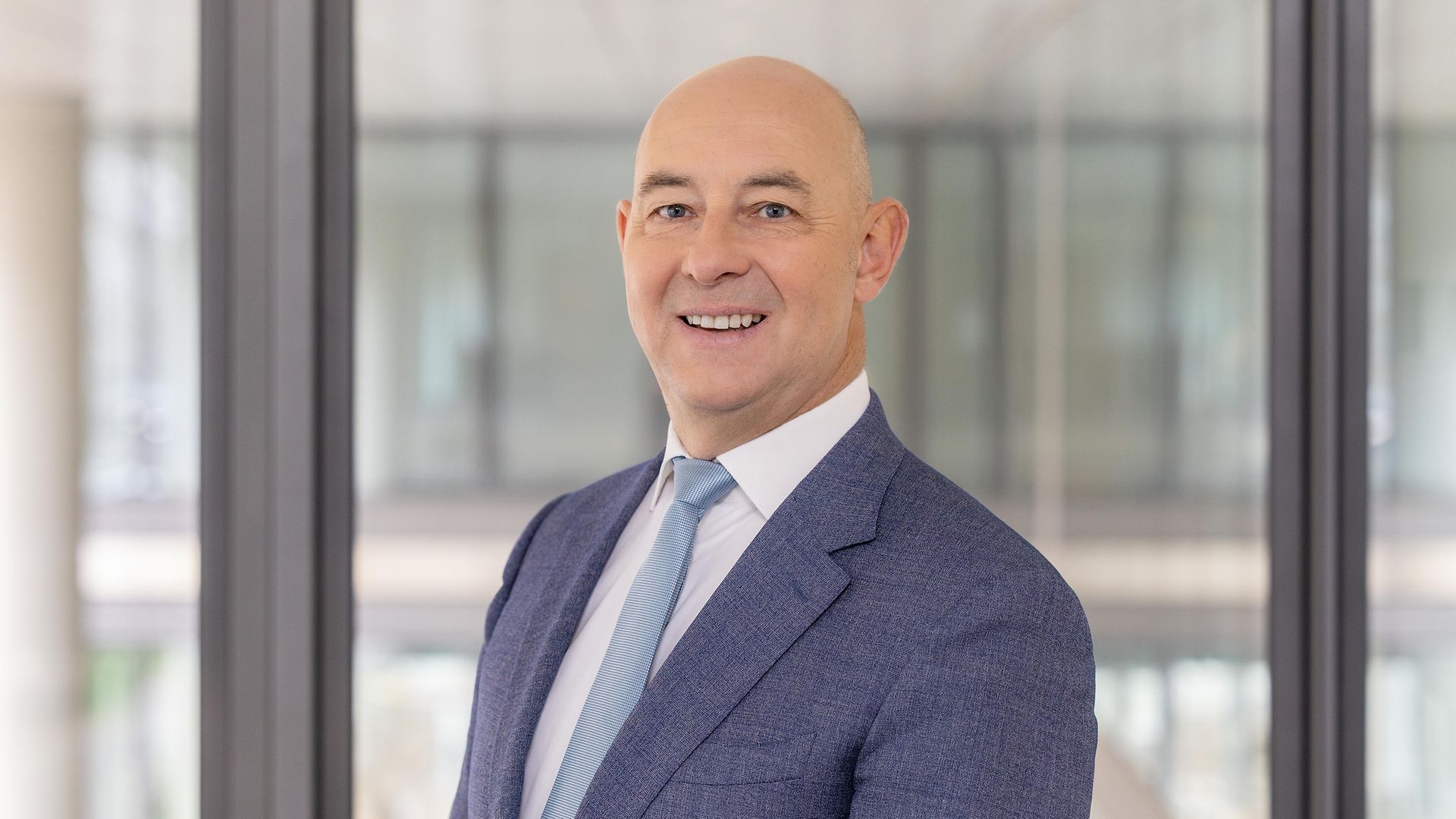
“We Are Now the Disruptor Ourselves”
Clearstream Fund Services is poised to capitalise on the democratisation of private markets, as Philippe Seyll tells Joseph Mariathasan.
The transformation of capital markets infrastructure rarely announces itself with fanfare. Yet beneath the surface of daily trading flows, a fundamental restructuring of the underlying architecture is taking shape with the strategic deployment of blockchain technology. Philippe Seyll, CEO of Clearstream Fund Services, sees Clearstream and its parent company, Deutsche Börse Group, as being in the vanguard of this shift toward distributed ledger technology (DLT) which represents not merely an incremental efficiency gain but a wholesale reimagining of how capital markets function.
The financial services industry, Seyll argues, is moving “from the old technology” to something fundamentally different. What makes Clearstream’s approach particularly significant is its refusal to treat blockchain as a theoretical experiment limited to announcements of proof of concept in a sandbox environment. Instead, it embraces a fundamental re-engineering of business lines, allowing clients to put real flows and volumes onto digital solutions and benefit from real efficiencies from day one.
As part of the Deutsche Börse Group, Clearstream Fund Services occupies a central position in the fund distribution and processing ecosystem. Seyll describes Clearstream as “the largest global fund Clearstream Fund Services provides order execution, settlement and custody for 245,000 funds 1,000 distributor clients and 1,000 asset managers Oversees over €4trn investment fund assets – with just short of €500m in revenue, serving 1,000 distributor clients, 1,000 asset managers and overseeing a little more than €4trn in assets.
The operational intensity is startling. “We churn approximately the equivalent of the GDP of the UK, every three days,” Seyll says, describing the huge transaction volumes that flow through the platform. This scale derives from Clearstream’s role as inter-mediary and gateway – “the person in the middle” – connecting distributors such as UBS or HSBC with asset managers ranging from BlackRock and Carlyle to regional firms across 47 markets.
This intermediation generates three distinct revenue streams. The order-routing and custody business handles the fundamental plumbing of fund transactions across almost 300,000 different funds.
The distribution contracts business streamlines fund distribution and leverages collective volume to negotiate superior terms with asset managers, operating on what Seyll describes as a “Sainsbury and Nestlé” model – bulk purchasing power translated into better rebates. The data business helps Clearstream’s clients manage regulatory reporting and the huge amounts of data as well as giving insights into the many millions of transactions passing through the system.
Seyll’s critique of current market infrastructure is fundamental rather than superficial. “We have a very sequential set of processes,” he says. This workflow follows a set pattern: trade execution, clearinghouse processing, cash settlement and securities delivery a number of days later. “You have this piling of sequential processes,” he adds. But with blockchain, Seyll contends, this architecture is eliminated. Parallel computing is much better than sequential computing and on a distributed ledger, all these processes happen instantaneously.
Multiple benefits beyond speed
The implications extend beyond mere speed. Reconciliation becomes unnecessary when the ledger itself serves as the single source of truth. Settlement finality enables immediate capital redeployment. Fraud detection becomes algorithmic, with an immutable audit trail. Regulators gain direct access to transaction records without relying on intermediary reporting.
For institutional investors, these technical improvements translate into tangible operational benefits: reduced counterparty risk, enhanced capital efficiency and lower operational overheads. More fundamentally, they enable market structures that are simply unfeasible under sequential processing constraints, says Seyll.
The strategic logic underpinning Clearstream’s digital approach began as a defensive manoeuvre, he explains. Analysing the value chain – distributor to Clearstream to transfer agent to asset manager – Seyll identifies the transfer agent as being particularly vulnerable: “Blockchain technology is perfectly suited to replace a current incumbent registrar.”
The defensive question was existential, he notes: “What if the transfer agent disappears?” If Clearstream remained passive, a critical link in its value chain would be void, leaving it dependent on whatever disruptor emerged. “That’s why we have decided to invest into the technology to protect ourselves from being disrupted,” explains Seyll.
“We churn approximately the equivalent of the GDP of the UK, every three days.”
Yet defensive necessity has evolved into offensive opportunity. “Now we see that we are at the forefront of the disruption so that we are the disruptor ourselves,” he says. Clearstream has developed its own DLT-based solution, the ‘Digital TA’, which “replaces the traditional transfer agent platforms” with a cloud-based software-as-a-service variant. Implementation is operational rather than experimental. Seyll says Clearstream has deployed the Digital TA for Standard Chartered, with live cases in multiple Asian countries where investors’ funds are “issued on chain”. This represents a significant shift – from facilitating existing infra-structure to supplanting it.
Collision of two worlds
The strategic potential of this technology extends beyond mere infrastructure replacement. Seyll identifies what he terms a “collision of two worlds” that is creating an unprecedented market opportu-nity. European governments, confronting pension inadequacy, are pushing retail investors towards capital markets through initiatives like the EU Savings & Investment Union. At the same time, private equity general partners (GPs), having “exhausted their... funding” from institutional sources, are “going lower” to access retail capital.
The friction lies in operational complexity. GPs lack the infrastructure to manage thousands of retail investors, including due diligence (KYC) requirements and capital-call administration. Traditional solutions such as feeder funds and fund-of-funds structures add layers of fees and complexity.
Clearstream’s DLT platform, meanwhile, offers a different approach. “We put it in the middle of the ecosystem. And what we do is that we shield the GPs from the complexity,” Seyll explains. Rather than complex intermediary structures, Clearstream provides feeders with technology. The DLT platform handles investor onboarding and manages capital calls on behalf of GPs.
“We are the first one,” Seyll claims, “we have launched it and we use the DLT technology.” If successful, the move will position Clearstream to capture value from the democratisation of private markets – a structural shift that could reshape asset allocation for an entire generation of retail investors.
Crypto and regulatory risks
Despite this ambitious vision, significant challenges remain. The cryptocurrency speculation that has surrounded DLT creates both reputational and regulatory risk. Deutsche Börse Group has not entirely ignored the digital asset space. It has invested in Crypto Finance Group for custodial services, and Clearstream is collaborating with Circle “on the integration of stablecoins into regulated European infrastructure”. The strategic challenge is extracting DLT’s transactional utility while avoiding speculative crypto’s volatility and regulatory uncertainty.
Geographic expansion presents additional complexity. While Asia already accounts for 20% of the business, with established operations in Hong Kong, Singapore, and Australia, Seyll identifies “nascent countries” like Indonesia and Thailand as the next frontier. Each market brings distinct regulatory frameworks and operational requirements.
Clearstream’s digital initiative is a case study in strategic transformation within financial market infrastructure. By moving early and deploying technology operationally rather than experimentally, the firm has positioned itself to shape rather than merely respond to market evolution.
The shift from sequential to parallel processing, enabling what Clearstream calls “atomic speed” settlement, paves the way for a range of different market structures. For institutional investors, this suggests both opportunity and imperative: opportunity to access new investment vehicles and operational efficiencies; and the imperative to understand how foundational infrastructure is being rebuilt.
Central hub for processing fund orders
Clearstream’s headquarters in Luxembourg Clearstream’s fund services business is rooted in the 2000 merger of Cedel International and Frankfurt-based Deutsche Börse Clearing, which initially formed Clearstream. The fund services arm has evolved through the Vestima platform, which Clearstream describes as “the world’s largest fund processing platform providing order execution, settlement and custody services for more than 245,000 funds”. It processes 45m transactions per year and serves 1,000 distributor clients and 1,000 asset managers, while overseeing just over €4trn in assets. It generates close to €500m in revenue.
What is distributed ledger technology?
Distributed ledger technology is a mechanism that enables digital data to be stored and updated securely across multiple locations on a shared network.
It enables users to carry out digital transactions without the need for a centralised authority. This decentralised structure underpins the functionality of blockchains – a type of data structure consisting of blocks of data – and enhances data security and transparency without the need for numerous audits.
While all blockchains are distributed ledgers, not all distributed ledgers are blockchains.
Philippe Seyll is CEO of Clearstream Fund Services and chair of the board of directors of Clearstream Fund Centre AG. He joined Clearstream in 2005 with a remit to expand the fund services business line and to deliver efficient processing solutions in partnership with the industry. He was previously managing director at BNY Mellon for eight years between 1997 and 2005.
This article first appeared in IPE magazine November/December 2025 edition, find the link to download below.

