



Creating a Global Financial Hub
Reference
This article was first published by Securities Finance Times.
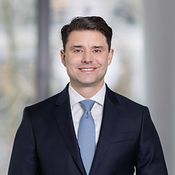
Marton Szigeti, head of collateral, lending, and liquidity solutions at Clearstream, sits down with Hansa Tote to discuss the firm’s role in enhancing post-trade services in the Middle East, improving connectivity to international banks, and transforming Saudi Arabia’s market into a regional and global financial hub
A hub for post-trade excellence refers to our open ecosystem strategy around post-trade services, which includes both securities and funds — it includes both the ‘real world’ as well as the digital parts that we are rapidly building out.
With this, whether you are looking at issuance, or other aspects of post-trade such as custody, settlement or collateral, we strive towards a partnership approach. This means elevating our partners wherever they are.
In our role as a leading international central securities depository (ICSD), we typically build links into regional hubs to facilitate global capital flows, allowing international investors to invest in local markets, and, in some instances adopt that model with the local markets, allowing local investors to invest into the international markets.
Creating links for capital flows is important, but once international and local investors hold assets respectively within either their local environment or in the international market, those assets have to be mobilised. Institutions such as banks or asset managers will buy assets for a purpose, and while they hold those assets, they may need to finance them, or they may need to use them to collateralise other exposures. The purpose of the collateral management platform is to facilitate the reuse of these assets. When firms are able to reuse an asset in order to finance their business, it creates demand for those assets, because they become more liquid and more usable. The assets can be used to create short term funding for businesses.
When we look to partner with regions, those benefit by their local assets becoming more usable in the global markets overall. If these assets become more mobile, they become more relevant for financing, providing access to a broader network of counterparties that can use those assets. This increases demand, and therefore directly drives capital inflows into those markets.
Clearstream is well positioned to provide post-trade excellence both from an innovation perspective and tailored to the respective needs of regional markets as opposed to a ‘one size fits all’ approach. Our aim is to elevate the markets that we work with into a global standard.
Clearstream signed a Memorandum of Understanding with Edaa in October. What were the key drivers behind this partnership?
The Memorandum of Understanding (MoU) with Edaa, the Saudi Securities Depository Center Company, and subsidiary of Saudi Tadawul Group, was driven by the Kingdom of Saudi Arabia’s (KSA’s) Vision 2030, which impacts all areas of the economy of the region, but is very relevant for financial services. Saudi Tadawul Group, is the trading, clearing, and post-trade market infrastructure provider for Saudi Arabia’s capital markets, and is driven by a vision to become a leading regional and global financial hub.
The scope of Vision 2030 is broad and discusses uplifting everything from retail banking through to central banking, through to institutional banking — the entire capital market and banking infrastructure within KSA.
To achieve this, Edaa has to continue accelerating its transformation from a local player in a market with limited debt and equity issuance and capital controls into a regional hub where they not only can operate a much broader and more liquid market, but also have a suitable capability to interact regionally and connect to the global international markets. The challenge is not just about building a machine, it is about building a liquid market and attracting international investors into the local market. As the local market participants become more sophisticated, larger, more liquid, this will give them a world class platform that they can use to trade on, custody in, and fund and finance.
The MoU Clearstream signed with Edaa looks at the various aspects and requirements to move from where they are today into a regional and global financial hub. A component of that is collateral management, something we have done in Canada, South Africa, Australia, and Brazil. That project is live. It is ongoing, and we will deliver through the course of this and part of next year.
There are other components around how Edaa connects to international markets with a global reach. It covers, for example, the further enhancement of Edaa’s fund unit processing capabilities alongside their securities processing capabilities, as well as discussions around digital — not just building a real world legacy infrastructure, but also learning from the digital transformation we are taking within Clearstream, as we look at employing digital collateral in our collateral management environment, and issuing natively digital bonds, interacting with cryptos and other forms of digital money. We are working with Edaa to assist them in their approach to the new digital world.
How does the collaboration aim to improve the overall efficiency and liquidity of the Saudi capital market and strengthen its infrastructure in line with international best practices and Saudi Vision 2030 objectives?
When the capabilities of a local market are enhanced, the number of participants that are willing to participate in that market increases, as well as the desirability of the securities that are locally issued in those markets.
When you introduce established collateral management and securities financing capabilities, you further enhance the attractiveness of that market because you are making those securities reusable, and they become financeable and
eligible in different contexts.
The objective of what Clearstream is doing is to build with Edaa and Saudi Tadawul Group a highly liquid collateral market local to Saudi Arabia, with connectivity into the
international markets.
The benefit of a triparty platform is that everyone is on the same platform, so by connecting to the platform, there are harmonised legal agreements, and the risk framework is understood. There is real clarity around where assets are, and there are enhanced levels of automation that most market participants, apart from large financial institutions, cannot afford to build within themselves. What a triparty collateral management system can achieve in local markets is democratising access to funding and financing, so even smaller regional players with limited automation and scale in their middle and back office capabilities can leverage the benefits of standardisation, transparency, and automation of a triparty platform to achieve equivalent access to the bigger global players. This in itself enhances liquidity. It enhances market access. It creates aspects that are highly desirable for developing a market, such as a harmonised liquidity layer, where any party can transact in a transparent way, and broadens the access across multiple counterparties.
Where the local market gains traction, this platform can be leveraged to also connect into the international markets and allow investors and dealers to mobilise international collateral locally, all in a very harmonised, standardised way, within the Edaa environment.
The future Saudi Collateral Management Service (SCMS) is described as a best-inclass domestic triparty model. How will SCMS change day-to-day collateral and liquidity management for local banks and brokers? And how will it enhance connectivity to international markets?
With bilateral repos, firms agree on their own legal framework around how to exchange securities for cash and how to unwind those trades.
This means there is an element of difficulty involved in bilateral trading. As there are no platform fees, costs are low, however it lacks transparency and automation.
With only one contract in place with one counterparty, a middle or back office has to conduct valuations, consider when they have to do margin calls, and understand if some instrument that is posted is going to have a corporate action.
Considering the scale — trading a growing number of contracts simultaneously across 20, 30, 40, or even 50 different counterparties, this results in a significant amount of manual effort in maintaining such processes manually.
Automation and standardisation, such as standard legal and collateral agreements in a triparty environment, will simplify such processes. Once a security is in a triparty collateral management system it stays in such a triparty setup.
This means if I collateralise you with something and take your cash, what I have collateralised you with stays in a triparty. It is transparent. If I give your cash back, I know the collateral is there. If I need to get some of those bonds out, I can, the triparty engine knows about corporate actions and automatically retrieves them and replaces them as something else.
There is a high degree of automation as well as a high degree of optimisation that comes with this.
If a bond is posted as collateral, and that bond is suddenly in demand, the engine will identify it and remove the bond to replace it with something of equal value but lower quality whilst remaining eligible, thereby reducing cost of financing.
There is no need to have a middle and back office doing this, firms can simply put their assets in a certain account, and the algorithm will automatically manage that for them.
In addition, when transactions are conducted bilaterally, a schedule is agreed. It typically takes a couple of weeks to set these schedules up, meaning in order to trade, there are often two to three weeks of filling out forms and ticking
boxes that need to be done in order to be able to trade on the triparty engine.
We have an electronic digital collateral schedule capability that can source counterparties and can collateralise bonds.
This technology is perfectly suited for markets like Saudi Arabia, which is actively building its debt capital market. Until last year, Saudi banks held more deposits than debt,
and this ratio has now changed.
Despite its vast cash reserves, which have traditionally funded infrastructure projects, the Kingdom is now opening its markets. The aim is to attract international investors and create a robust debt ecosystem, ultimately making the Saudi Arabian market more investable.
So that is a really important change, but the local banks are not yet set up to operate in a highly liquid capital market. Therefore, introducing this triparty capability allows them to jump from being operating in a highly manual, low volume, low complexity market in comparison to some of the major global markets in the world, to having a leading capability that will allow them almost unlimited growth.
Clearstream previously launched the Canadian Collateral Management Service (CCMS). What lessons from Canada are informing the Saudi rollout, and what adaptations are needed specifically for the Saudi market?
Saudi Arabia operates on a Sunday, meaning it requires effort from our side to adapt our systems and operating model with Edaa as we do not run Sunday operations anywhere else.
There is also effort required from Clearstream’s Investor Services and Custody business, as we optimise constantly in almost real time our collateral management service. For us to do that, we rely on core back-end custody and settlement systems to provide the required information, including pricing files and reference data.
To cope with Sunday processing, we have already kicked off a large upgrade of Clearstream’s post-trade infrastructure, which is running in parallel with the move to a 24/7 processing model required for the digital transformation initiative going forward.
If we were to take some of the areas where we had to do extra work in Canada, it was certainly understanding the legal frameworks. Even in fairly familiar markets, the legal frameworks are subtly but importantly different.
Right from the start in Saudi Arabia, we knew we had to understand the specific laws for the repo and securities financing market. This was necessary so that our collateral management system could handle the unique way contracts are enforced there, which is different from standard procedures.
It is not a major new innovation, but when you take what you have and put it into a different context, with a different work week, a different legal framework, different regulation or regulatory environment, different kinds of capital constraints, evolving market situations, there is some sensitivity that we have to apply, in addition to a lot of upfront learning.
And more importantly, we have absolutely excellent partners in Edaa who are operating at a very high level of sophistication regarding assisting us in learning the specificities of their market.
What developments can we expect from Clearstream in the Middle East in the next few years? How will the firm strive for innovation in a world focused on digitalisation and tokenisation?
The Middle East encompasses very different countries with very different regulatory setups, and Clearstream is very well represented across the region. We will be working very closely with the Kingdom, Saudi Tadawul Group, and Edaa on rolling out not just the collateral management service, but also broader enhancements to their CSD capability, their funds capability, and digital solutions.
Vision 2030 is extremely ambitious, and is taken incredibly seriously from the top of the government all the way down to implementation. This vision is not an aspirational paper, this is something which will be delivered, and we are very proud to be able to partner with Edaa and Saudi Tadawul Group in helping to grow and develop the Saudi capital market.
It is natural in the Middle East for the other nations to take note of what Saudi Arabia develops and strive to match the ambitions. Therefore, I expect that we will see bold moves coming out of the United Arab Emirates (UAE), and we would be very happy to partner in this regard.

